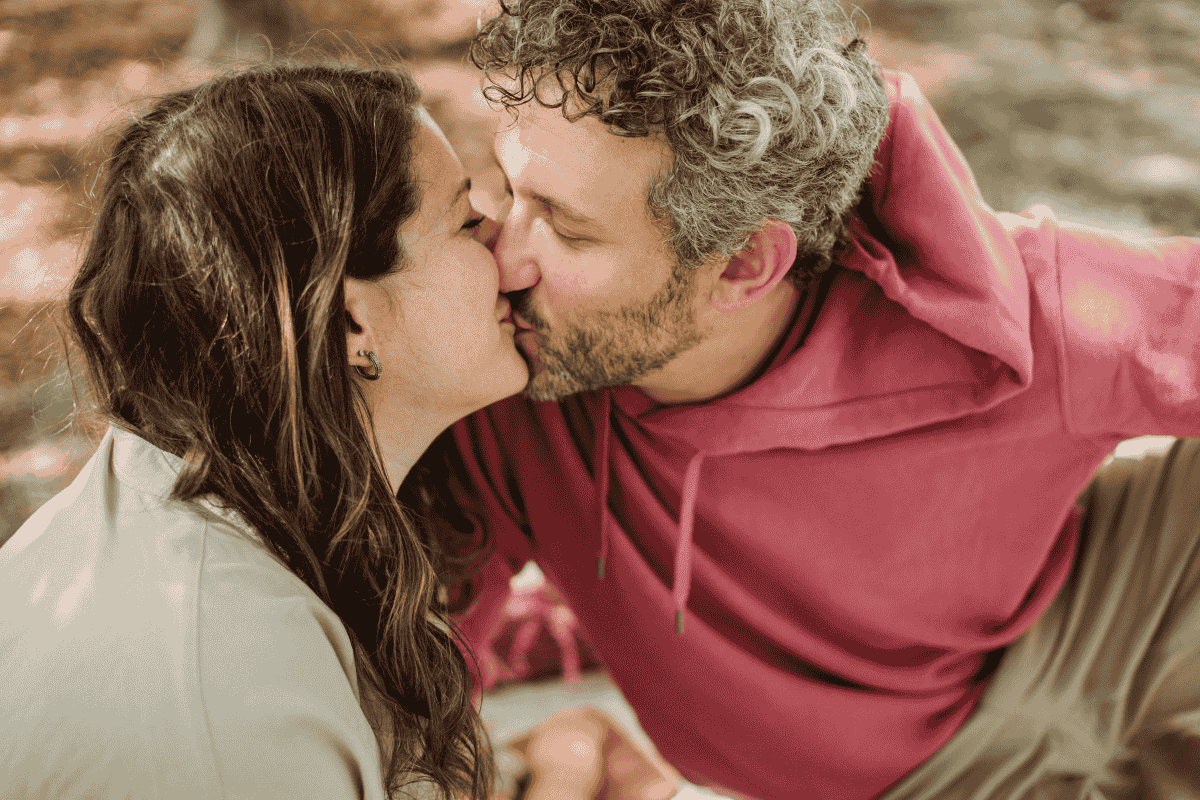
For a long time, sex felt easier when I wasn’t fully present. A drink. A joint. A mellowing. This is about what I was masking, what surfaced when I knocked my addictions on the head. And why so many of us try to numb what intimacy asks us to feel?
Why I Used Substances Before Intimacy
For months, I noticed the pattern before I understood it. Intimacy arrived. Then substances followed soon after. Not always to celebrate or heighten pleasure. More often, it was to take the edge off. Of myself.
I told myself it was relaxation. Something earned. Something normal. But slowly it became clear it was a confidence trick — deflection masquerading as pleasure. The quiet truth was that I didn’t feel ready to reveal myself in those moments, and I didn’t know how else to cross the threshold into closeness.
Why Intimacy Problems Aren’t About Love
This took time to see. On the surface, I probably looked fine — loving, engaged, present enough. But there was a gap where honesty hadn’t learned how to speak. Relate notes that closeness can be thrown off by stress, life pressure, and the everyday things that quietly get in the way of intimacy. It became clear that stress and anxiety can strain relationships in ways that aren’t really about love at all. I didn’t lack feeling. I lacked language — and I didn’t know how to say what was true when the moment demanded presence.
What Substances Were Really Covering
It wasn’t my partner I was avoiding. It was exposure. Sex and intimacy asked me to be seen without armour, and I didn’t trust what would happen if I showed up as I was. I was anxious about the outcome, so I softened the edges. Slowed my heartbeat. Quietened the part of me that doubted it would be accepted.
Drinkaware states that while some people believe alcohol helps confidence in intimate situations, it can actually reduce sexual responsiveness and increase later dissatisfaction. Substances become a way to regulate what felt unmanageable. In the same way some people with ADHD use prescribed medication to steady impulsivity, I anaesthetised uncertainty and discomfort rather than understanding it.
Why Stopping Substances Felt Easier Than Expected
What I didn’t expect was how easy it was to stop — once I saw the cost to myself and my relationship. Giving up alcohol and cannabis wasn’t an act of discipline or purity. It was clarity. Once I realised they were standing between me and my partner — not enhancing intimacy but buffering me from it — they lost their power. I stopped because I wanted my yes to be true.
I became intrigued to know how sobriety would transform my experience of intimacy. Would desire start asking more difficult questions? Who am I, really? And why am I rushing my body past itself before it’s had a chance to discover who it might become? This has provoked some uncomfortable truths. But at least it is honest. And intimacy insists on honesty.
What surprised me when I quit my addictions
Giving up alcohol and cannabis wasn’t an act of discipline, purity or self-improvement. It was clarity. That experience helped me understand how insight can interrupt compulsion. When a behaviour is clearly linked to harm against something we deeply value, change often happens with far less struggle than expected. I didn’t stop because substances were “bad”. I stopped because they were in the way. Once I saw that clearly, there was nothing left to argue with.
What Men Struggle to Reveal about Intimacy
For me, the answer was acceptance. If I showed the real me — my true desires, my uncertainty, my vulnerability — would I feel clumsy, exposed, ridiculous? As a child, I experienced trauma that shaped how I understood intimacy and closeness. I’d never fully explored what that meant, so I found it difficult to explain it to my partner. The result was a split experience. On one side, here was the adult engaging in intimacy, of a kind. On the other side, there was an inner child (a trauma-formed protective ego state) shying me away from the experience. That inner child was the one pouring another drink. Rolling another joint while whispering reassurance: Everything’s fine. Just one more. I’ll keep you safe now.
Except I wasn’t.
Psychiatrist Dr Bessel van der Kolk, author of The Body Keeps the Score, puts it like this:
“Traumatised people stay on hyper alert; they feel chronically unsafe and in danger, and they have problems feeling calm and enjoying the moment and they are out of touch with their surroundings.”
In intimate moments, the body doesn’t remember dates or timelines. If something once felt unsafe, it can still react as if it’s happening again — even when the danger has long gone. If closeness once felt confusing, overwhelming or unsafe, the nervous system can step in to protect — long after the original threat has gone. That’s how the past quietly walks into the present, without ever announcing itself.
Why Emotional Safety Matters
I used to believe better sex meant more confidence, more certainty, more performance. What I’m learning is that it means less protection between my deep-seated fears and the other person. Which begs the question: how can we be ourselves if we don’t feel safe enough to reveal who we actually are?
Why I’m Saying This Out Loud
I left it too late. I didn’t give up my reliance on substances in time to change the outcome of my relationship. It ended before I could fully meet my partner without armour. I share this not for sympathy. My journey has taken a different path and I accept that. But I know I’m not alone in this pattern — and silence only protects the pattern itself.
I’m not here for self-gratification. If this helps one person step closer to their truth, it’s worth the discomfort of saying it out loud. This article hasn’t been easy to create. But it would have been harder to keep it to myself. The FNG exists to help others move forward. If my missteps can serve that purpose, then so be it. We are in this together and I am no different from you. If you choose to follow me on my journey, that’s great – I can always do with the company.
Learning to Be Present Without Numbing
I wonder how many men mask themselves during intimacy. How many use substances not for pleasure, but for permission. And what might surface if that permission came from within — rather than the bottom of a glass or a tightly rolled joint. I can’t change the past, but I can alter my present. Without addictions, my monthly budget stretches further. I feel immune now to the scent of a glass of red wine or the hazy bouquet of marijuana. I don’t know when intimacy will come again. But out of respect for the past, it won’t be under the influence. Perhaps conversation will come before closeness. Perhaps things will move slowly, with awareness and honesty.
At The Farm, growth is rarely dramatic. It’s patient. Quiet. It shows green shoots months after the work is done — like the daffodils and hyacinths I planted the year before. I want to see what unfolds. And when the petals open, I’ll be sober enough to notice their beauty — and smile.